

In our 4-part article series, we explore the differences between traditional and agile organizations, their difficulties and advantages. First-hand experiences.
The problems we start from
Most organizations, and especially their employees, feel that things aren't working properly, and this leads to a lot of tension. This can be for a number of reasons, but it can mostly be traced back to the following six:
- Strategy unknown
- Priorities are not clear
- Responsibilities are blurred, decisions are slowed down
- Design problems
- The team is not suitable.
- Exceeding deadline
Of course, every organization and team has a different situation, they come into play in a different order and with different weight, and it is not at all certain that all of them will appear.
The good news, however, is that by introducing agile methodologies, we are able to achieve changes in almost all cases , whether we look at it from the perspective of employees, middle managers or even senior managers. I have brought several examples from the experiences of recent years, of course without claiming to be exhaustive.
In each case, I will first outline the problem, then discuss the benefits of an agile structure. I will also discuss the challenges that come with it, because no system is perfect , so it would not be credible to only highlight the positives.
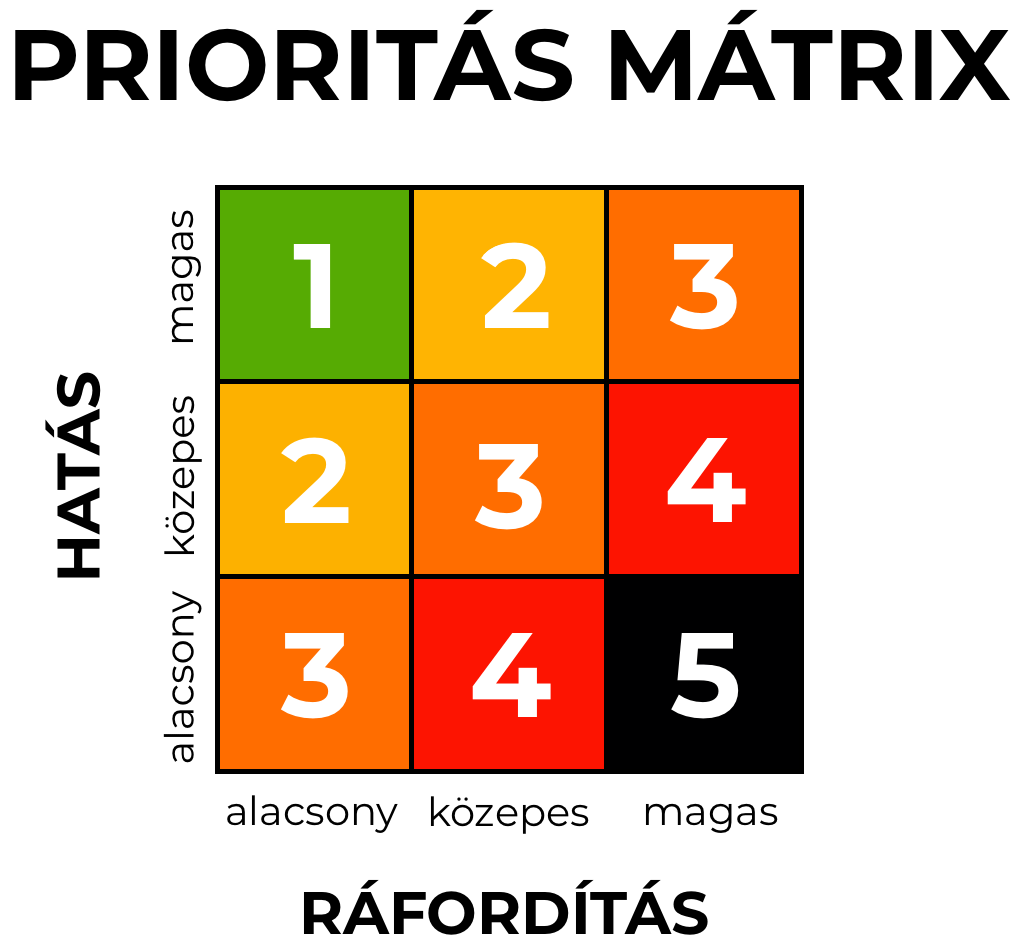
Lack of strategy and priorities
In the case of many teams, I have found that although individual colleagues worked a lot, when we asked everyone individually, two things typically happened:
- Some of them couldn't say what the goal they wanted to achieve was,
- The other part of them marched towards a vision that differed to a greater or lesser extent.
What is certain is that both happened very rarely at the same time, and this suggests that they were not working together as a team to achieve their goals, but that everyone only saw their own next task in front of them and was only concerned with that. And that is a problem.
Agile structure and a fully transparent backlog are significant improvements, but they are only a partial solution. Product owners can help their colleagues with more than this:
- In my experience, it works great everywhere if we condense the many tasks into a few easily understandable strategic goals.
- I definitely do not recommend more than 10-15 such elements, beyond that it often becomes difficult to follow them.
- It’s a good idea to keep it in a central place where everyone can easily access and see it. This could be a Trello board, or even better, a post-it on the team wall. That way, it’s always in sight.
- It's also worth marking their progress: "prepared for work", "in development", "under testing", "in production" or "completed".
- We follow the team's progress every day at every stand-up meeting, so everyone knows where the work processes are headed.
Blurred responsibilities, slow decisions
Another recurring problem in many organizations is that as the middle management layer expands, responsibilities become fragmented, the organizational structure becomes organized into silos, and decision-making processes inevitably slow down. What are the typical problems?
- On the one hand, many decisions require multiple roles.
- On the other hand, many people don't like the responsibility that comes with decisions.
- Thirdly, the necessary competence is often lacking.
In this situation, it helps a lot if teams are structured cross-functionally and if possible, all necessary roles are found together.
However, this does not solve all problems, many good professionals - whether managers or employees - continue to try to shrug off responsibility. They do their job and from then on they do not care what happens next.
In my experience, it is very important to state firmly and repeat often that the work of neither role is important in isolation, but rather represents value together, resulting in a product or service.
In my experience, this change in mindset is achievable with a consistent leadership approach.
Continued in part 3 of our Agile article series !
About Training360's agile training
The development of our renewed agile training portfolio was preceded by a thorough preliminary survey, so we offer a comprehensive educational solution for an extremely wide range of needs.
- Agile management training courses are available for all levels, from beginner to advanced.
- In addition to traditional agile methodology training, we also cover gap-filling topics such as digital product management, app management, or UX/UI.
- Employees, middle managers, and senior managers can all find training courses that are relevant to them.
- Not only members of development teams, but also product managers, salespeople, or HR experts can get a good idea of agility.
- Many courses also prepare you for internationally recognized exams.