

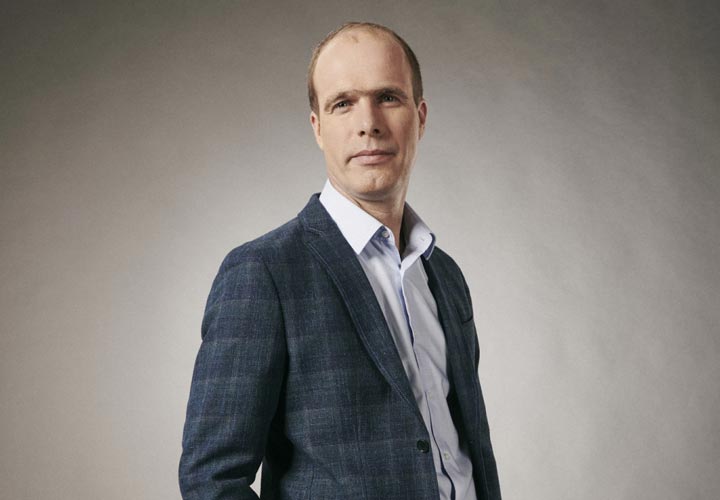
The previously supply-based employment in Hungary has become absolutely demand-oriented. According to market trends, employers are looking for employees, and not the other way around. The old methods no longer work. “Giving someone a good wage and good working conditions is the basis. A completely complex change is needed on the part of companies if they want to keep good employees,” said József Nyisztor, CEO of Training360 Kft. and an expert in workforce development, to Portfolio. He also talked about the fact that today it is good for a company to plan for 3-5 years with its employees, while a 10-year time horizon is no longer foreseeable.
One of the most pressing economic problems of recent times is the labor shortage. There is an increasing focus not only on recruitment, but also on retention. How can turnover be reduced?
Let's start with why turnover is a problem for companies. If 5 percent of the company is replaced, it means that the entire staff is replaced in 20 years. If the turnover is 20 percent, however, this process takes place in 5 years. Meanwhile, the company itself is changing, meaning that knowledge transfer cannot be realized in a shorter period of time in the traditional way, or can only be partially realized.
And this is the biggest problem, that with the colleague who leaves, the knowledge is also lost. Reducing turnover is a complex problem. Companies need to determine exactly how much they want to reduce turnover, and why it is important to them. A specific plan needs to be made.
The previously supply-based employment in Hungary has become absolutely demand-oriented, companies are competing with each other for good labor and are trying to suck seniors from each other. The methods that worked in the past, where someone offers a higher salary and better working conditions, will not work, because everyone already gives them. This is the basis. You have to adapt to the needs of the employees.
This means that companies have to meet extremely diverse employee needs. How can this be done?
The senior colleague is the soul of the company. You can rebuild the business with seniors, they are the ones who have the most knowledge, which they can pass on to the younger colleagues who come in. Young people and those who have been working at the company for a long time have different needs. The latter want to have a greater say in decisions, to have greater responsibility, to see that they are doing something meaningful. Young people want to develop first and foremost, they don't want a boss, but a leader who helps them in their work. They want to feel that what they are doing is useful. This presupposes that they need to be trained in a much shorter time than before, so that the development is spectacular, so that there are steps that can be taken. That is why a mentoring program is also needed, with which we can already predict that he will soon be the mentor of the newcomers. For today's young people, the perspective is important, so that they can continuously move forward in small steps.
What is the guarantee that the young employee, after learning new skills, will stay with the company in the long term?
What is considered long-term? If we can count on the employee to be stable for 3-5 years, that is already very good. It is rare that someone's life situation, the development of the given sector, their individual needs and the development of the company point in the same direction. Someone joins a company, and it is by no means certain that that company will still be dealing with the same things in 5-10 years as it is now. Of course, retraining is an option, but emigration is also completely natural. The world has accelerated, and it is not necessarily good for someone to work in the same job for 10 years.
So, basically, it's not worth thinking in the long term anymore?
At Training360, we believe that a 1-3 year strategic plan is needed, in which we assess the risk factors and try to find solutions to the problems. It is important to remember that the working relationship does not last forever, this is normal. That is why knowledge transfer is important, this is why it would be worth focusing on retaining seniors first, because they are the ones who pass on the knowledge to the new ones.
What are the short- and long-term benefits of an effectively functioning knowledge pyramid?
It is possible to quantify how long it takes someone to learn if they have a senior helping them and if they don't. In the latter case, the newcomer will reach approximately 60 percent of the knowledge required to perform the job in 3-6 months, and 100 percent in one to one and a half years. With a good mentor, this can be accelerated, we can gain 3-5 months. If we hire the new employee in such a way that we already see him as a future senior colleague, and we build him up in such a way that we plan with him for 5 years, and that way we start investing in him, then the company can gain a lot. But the whole thing only works if there is a concrete plan, a change in attitude, and the measures point in the same direction.
Nowadays, there are very complex tasks. How can this be handled?
There are many more different types of jobs than before, one leads to another. The other problem during the hiring process is that for this very reason we will no longer find the right person for the complex job, because there really are no people who are exactly right for it. We have to generalize a bit and train the new employee after they start working. But that takes time. That is why it is worth putting a free valence in the company, having a reserve person so that the work runs smoothly during the training period. If there are no such people, the entire system will be overloaded by fluctuation and the training period.
So, if someone wants to reduce turnover, accelerate knowledge transfer so that the new colleague can start working sooner, that is serious change management, the steps of which must be meticulously planned and carried out. However, for this to happen, it is essential that the company invests in its leaders. They must be the first to adopt the new approach so that they can authentically set the organization in a new direction. We must not forget about senior colleagues, who are the stem cells of the enterprise, because the joint redefinition of their role is also essential for successful change. Obviously, nothing will be achieved if the senior manager is not open. An external helper can contribute greatly to success. For example, I have a coach who regularly works with me, with whom we develop different areas. In some cases, however, a good HR person who helps the senior manager and participates in organizational development can also be enough. The point is to formulate goals as soon as possible and take steps to achieve them.